* 9e31235211 pacman: Make sure hookdir exists
* 20009b7f48 make_image: log systemd-repart *.conf files at the --debug level
* b94b415db9 run: Increase string limit for strace when debugging sandbox
* 9f6d9405d6 Ring the terminal bell after the last image has been built
* b509b4246d Add glob in default initrd to exclude some exotic drivers
* 189394b8b9 Allow KernelModules= globs to also match relative to modules root dir
* 92bd086e4e zypper: add --force-resolution flag
* 3637749702 kmod: Only add fully resolved fw path if it exists
* d41ac276c9 Add details to KernelModulesInitrd= doc
* 1b6960ddb1 Fix SplitArtifacts=repart-definitions for addons
* 07464f38d6 Add log_step call in build_kernel_modules_initrd
* 18f5885362 Use proper constants for ansi colors
* 454c1602b6 mkosi-obs: add SplitArtifacts=repart-definitions and use it
* 9e57461af6 Copy repart definitions to staging directory
* 1acab18874 Add SplitArtifacts=repart-definitions
* c5c5c225e8 mkosi-obs: always include verity certificate
* ac5babb8e0 Revert "Use Path.relative_to instead of Path.parts"
* cbb1daeb76 action: Use environment variables instead of inputs
* 97c81eef72 portable: support split roothash
PCR 16 is intended for debugging purposes, and is the only PCR that can
be reset by software. Let's prefer that for testing.
PCR 11 has a purpose (i.e. kernel is measured there on UKI systems, as
are the boot phases), hence let's not use that for testing.
That should remove any interference of boot time ordering and testing
our tpm code, as we will write to PCR 16 only, and reset it before we
rely on it.
This likely, kind of fixes#39582, but the issue mixes two things, PCR
11 issues on real-life hardware, and PCR 11 isues in our artificial
tests. Only the latter is addressed by this PR, the other issue needs
more debugging, but without logs we cannot do much.
Since these helper processes aren't spawned in the unit cgroup,
let's explicitly attach unit log context so that all logging gets
attributed to the unit, including the ones done in library calls.
Given the integration tests take a while to run, it is useful to see
at which point it is while it is running. Sometimes only a test
script or such subset is changed, which means there's no need to
wait for the entire suite to run, especially with the sanitizers
job which is super slow.

Partially reverts 9848f56cc6
This is also temporary, but demonstrates that the version of qemu
currently in noble-proposed fixes https://launchpad.net/bugs/2127974,
which will ultimately allow for the fix to be released to noble-updates.
Same case as IdeaPad D330, matrix applied to solve issues in wayland
compositors when is not the way because correct data is send by the
sensor.

As described in #39529, let's remove the matrix.
Before doing anything with the root directory file descriptor, let's
make sure we clone it first so that the caller can't mess with mount fd
attributes via mount_setattr() anymore.

We clone during parsing instead of in executor so that the caller can't
mess with the mount fd between invocations.
Before doing anything with the root directory file descriptor, let's
make sure we clone it first so that the caller can't mess with mount fd
attributes via mount_setattr() anymore.

We clone during parsing instead of in executor so that the caller can't
mess with the mount fd between invocations.
The kernel prevents you from open_tree()'ing an open_tree() fd unless it
was created from the caller's mount namespace. For various use cases, we
want to be able to open_tree() arbitrary mount file descriptors. Turns
out there's a way go get around it by mounting the mount file descriptor
in a throw-away mount namespace and then open_tree()'ing the mount file
descriptor. Let's implement this as a new helper mount_fd_clone() and
add a test for it.

Because move_mount()'ing the original fd makes it pretty useless as it
can't be move_mount()'ed again, we optionally make a second clone which
can replace the original fd so it can be cloned again later.
Config files for --root= weren't picked up as expected because the
--root= flag got parsed after the config file.
Switch the order of config file and CLI flag parsing while letting the
CLI flags overwrite things set by the config files by tracking state
during parsing.
Currently, image_new() will calculate the image
path as the combination of dir_path and filename,
which is completely broken if filename is absolute
and dir_path is set.

Let's fix this by thoroughly cleaning up the
image_make() interface. Instead of having four
different arguments to pass in the image path,
let's reduce that to two, a file descriptor and a
path. If no file descriptor is provided, we create
own ourselves by opening the given path.

The callsites are updated to pass in an existing file
descriptor when available. Path calculation is moved
to callers instead of image_make().
meson test output is extremely verbose, printing
a separate line for each successful test. Let's
add -q/--quiet everywhere so it only prints full
lines for skipped and failed tests.
Follow-up for 7c0afcdde2

Addresses https://github.com/systemd/systemd/pull/40060#issuecomment-3641288267

As commented, the unknown values should have been filtered out
in pid1's initial parsing already, and the communication between
pid1 and executor is entirely internal which makes the graceful
practice counterproductive.
Usually we gracefully ignore unknown configuration parameters, so that
service files can be written by upstreams and used across a variegated
range of distributions with various versions of systemd, to avoid
forcing users to the minimum common denominator and only adding settings
that are supported by the oldest distro supported.

Image policies do not behave like this, and any unknown partition or
policy designator causes the whole unit to fail to parse and a hard
error.

Change it so that parsing RootImagePolicy and friends via unit file or
D-Bus logs but otherwise ignores unknown specifiers, like other options
do.

This allows us to add new specifiers in the future, and users to adopt
them immediately.

Follow-up for d452335aa4
When a TTY is attached to the test unit, grep -q will generate SIGPIPE
for the previous command in the pipeline which in combo with `pipefail`
will cause the command to fail with exit status 141 which will fail the
test.

Replace with >/dev/null to avoid this from happening.

See also https://www.gnu.org/software/grep/manual/html_node/Usage.html
> There is a related problem with Bash’s set -e -o pipefail. Since grep
> does not always read all its input, a command outputting to a pipe read
> by grep can fail when grep exits before reading all its input, and the
> command’s failure can cause Bash to exit.

Co-authored-by: Yu Watanabe <watanabe.yu+github@gmail.com>
 Yu Watanabe
 Mike Yuan
 Luca Boccassi
 Lennart Poettering
 Zbigniew Jędrzejewski-Szmek
 Luca Boccassi
 Priit Jõerüüt
 Henri Aunin
 Nick Rosbrook
 0x06
 David Santamaría Rogado
 Daan De Meyer
 Alexis-Emmanuel Haeringer
 Kai Lueke
 Fletcher Woodruff
 Antonio Alvarez Feijoo
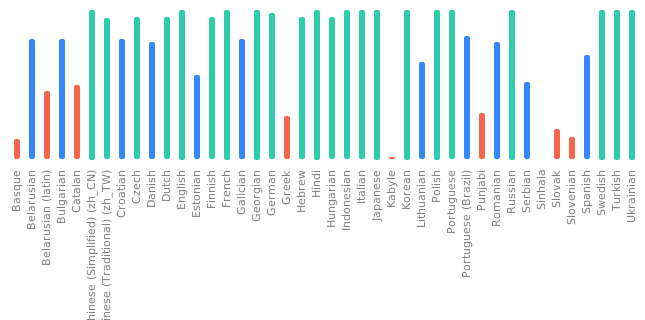
 Temuri Doghonadze
 David Tardon